
Black Spades - Jokers & Prizes
Konsole Kingz, LLCCard
3.51.16K Reviews
- Version
- 3.16.2
- Installs
- 100.00K
- Age Rating
- Teen
Screenshots

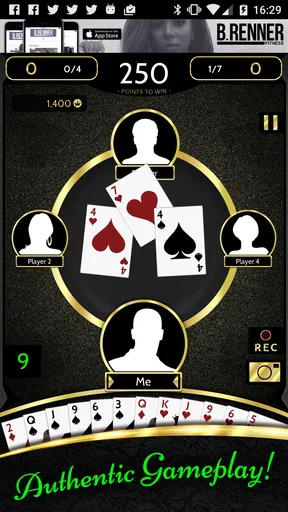

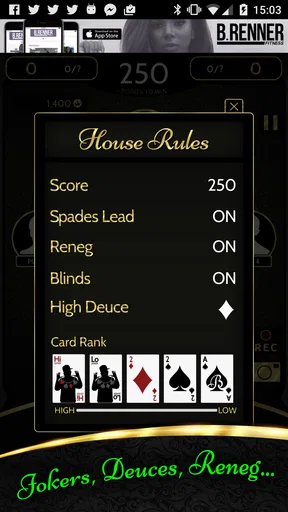
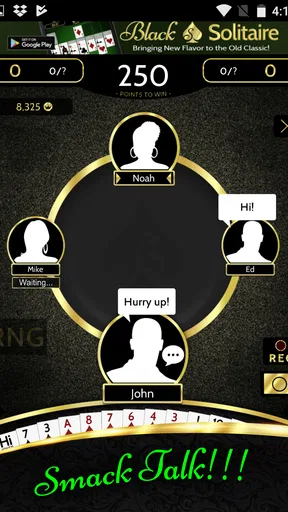



Our Review of Black Spades - Jokers & Prizes
 Analysis by Appyee
I approached Black Spades - Jokers & Prizes as a card game for players who already enjoy trick-taking but want more variation than a standard Spades table provides. The basic appeal is easy to understand: you are still planning bids, choosing when to follow suit, and trying to control the hand, but the added card rules can make familiar decisions less predictable. My first impression was that this is not meant to be a quiet, purely traditional card-table simulation. It is a more dramatic version of Spades, built around special cards, changing risks, and the possibility of prizes.
That difference matters before you install it. If you want a straightforward game of classic Spades with no surprises, the extra rules may feel like clutter. If you like learning a recognizable game and then discovering that the usual safe play is not always safe, this version has a stronger personality. It is free to download, carries a Teen content rating, and comes from Konsole Kingz, LLC. The game has reached over one hundred thousand installs, while its average sits at about three and a half stars from roughly two thousand ratings, so I would describe its reception as mixed rather than universally enthusiastic.
What to expect from the card table
The central experience is still about reading the hand and making decisions one trick at a time. You need to think about what you bid, what cards may already be gone, and whether taking an extra trick will help or hurt the result. The difference is that this edition places more emphasis on special situations. Jokers, wild deuces, blinds, reneges, and prizes all change how confidently you can rely on normal Spades habits.
For a first-time player, that creates two separate learning curves. The first is ordinary Spades strategy: estimating your hand, tracking suits, and understanding when to protect or sacrifice a trick. The second is learning how this particular rule set treats its unusual cards and calls. I found it useful to treat the first few hands as practice rather than judging my skill immediately. A move that would be sensible in a conventional game can be too cautious or too aggressive here.
The presence of Jokers and wild cards is especially important. In a normal hand, a high card can give you a fairly clear idea of your control. A special card can interrupt that certainty, so I would avoid building a bid around one powerful-looking card until you understand its role. The better approach is to ask what the card lets you do in this version, then consider whether opponents may have comparable ways to disrupt your plan.
Blinds add another layer of pressure because they encourage decisions before you have the same information you would normally use. That can make a session feel more exciting, but it also makes the game less forgiving for someone who is still learning the basics. I would not recommend starting with a high-risk mindset. First learn how the table scores and reacts to your decisions, then experiment with more ambitious calls.
Reneges are another point where attention matters. In a standard trick-taking game, following suit is automatic enough that new players may not actively monitor it. Here, a suspected failure to follow suit can become a meaningful event rather than a minor mistake. I learned to pause briefly before playing each card and check the suit led in the trick. That small habit prevents confusion and makes the result easier to understand.
The prize element gives the game a different emotional rhythm from a simple offline deck. Winning a hand is not only about proving that your bid was accurate; it can also feel connected to a larger reward loop. That can be motivating when I want a more game-like session, but it may be distracting if I prefer Spades as a calm mental exercise. Players who dislike reward-focused systems should decide early whether the extra incentive adds fun or pressure.
Starting without getting buried in the rules
My advice to a new player is to begin with one modest goal: understand the flow of a single hand. Do not try to master every special card, optimize every bid, and chase prizes at the same time. Watch which suit is led, notice how the unusual cards affect the trick, and pay attention to the result after the hand ends. That gives you a useful foundation before you worry about advanced play.
The game is available at no upfront cost, but it includes optional purchases ranging from ninety-nine cents to twenty-four dollars and ninety-nine cents per item. I would make the first sessions without spending anything. That lets you decide whether the rule mix suits you and whether the reward structure improves your experience. A free entry point is helpful here because the game has more variation than ordinary Spades, and personal taste matters more than a short store description can show.
It is also worth checking compatibility before you commit time to learning it. The current version is 3.16.2 and requires operating system version 11 or later. That requirement is particularly relevant on older phones and tablets. If your device is below that level, the practical answer is to use a newer supported device rather than assuming a settings change will solve the problem.
Turning the first hand into a useful lesson
A meaningful first success does not have to be a spectacular win. I count it as success when I make a reasonable bid, recognize one important special-card interaction, and finish the hand knowing why the result happened. That is a better milestone than simply tapping through the deal and hoping the cards carry me.
Before bidding, I would sort the hand mentally by suit and identify cards that may control tricks. Then I would separate ordinary strength from special-card strength. A hand that looks strong because of one unusual card may not support as many tricks as expected if the rest of the suits are weak. Conversely, a modest hand can become useful if it gives you a safe way to discard or interrupt an opponent's plan.
During play, I recommend tracking the suit that has already been shown as weak. If an opponent fails to follow that suit, remember it. That information can be more valuable than memorizing every card because it tells you who may be able to use a special card or trump-like option later. This is one of the less obvious adjustments that separates a careful player from someone simply reacting to the card currently on screen.
Another practical tip is to avoid spending your strongest option too early just because it can win the current trick. In a game with Jokers and wild deuces, immediate control may be less valuable than keeping a flexible answer for a later trick. I often ask myself whether the current trick is worth revealing a major resource. If the answer is no, losing one trick can be the correct trade for maintaining control when the hand becomes more dangerous.
When the hand ends, look at the relationship between your bid and your actual tricks rather than focusing only on whether you won. If you consistently overbid, your problem may be optimism about special cards. If you underbid, you may be failing to count the ways those cards protect or create tricks. This kind of review turns each round into practice and reduces the feeling that unusual rules are random.
Where new players are most likely to hesitate
The first common confusion is assuming that the word “wild” means a card can solve every problem. It does not automatically remove the need for timing. A wild card is valuable partly because of when you use it, and using it to rescue an ordinary trick may leave you exposed later. I would treat it as a limited decision tool, not a guaranteed win button.
The second confusion concerns blinds. A blind decision can feel like a challenge to guess boldly, but guessing is not the same as strategy. If you have little information, use the hand structure and the known rules rather than chasing an exciting outcome. Until you understand the consequences, conservative choices are a sensible way to learn.
Players may also misunderstand reneges if they are accustomed to fast mobile card games. The safest routine is simple: whenever a suit is led, check whether you can follow it before considering any other card. If you can, do so. If you cannot, then think about what your discard reveals and whether it changes the likely distribution of cards.
Prizes can create another kind of confusion because they may make every hand feel more important than it really is. I found that my decisions improved when I focused on the current contract first. Trying to force a prize-oriented result can encourage reckless bids, while sound hand management gives you a better chance of progressing naturally. The reward layer should support your decisions, not replace them.
The rating of around three and a half stars also tells me that expectations should be realistic. This is not a universally smooth experience for every Spades fan. Some players will enjoy the extra identity, while others will prefer the clarity of a traditional ruleset. That difference is not a flaw by itself, but it means you should choose the game based on your preferred style rather than assuming every card game with Spades in its name plays alike.
How it compares with ordinary Spades apps
Compared with a conventional Spades app, this game is better suited to players who want more events to react to. Traditional alternatives are usually easier to explain, easier to teach to a friend, and more predictable from hand to hand. They are the better choice when your priority is clean bidding practice or a relaxed game with minimal rule exceptions.
This version is more appealing when repetition starts to feel stale. The special cards and added situations give experienced Spades players reasons to rethink familiar habits. I enjoyed the way a seemingly comfortable hand could become uncertain, because it forced me to pay attention instead of relying on automatic patterns. The trade-off is that the extra variety can make a loss harder to diagnose, especially while the rules are still new.
It also differs from a purely offline card game in its broader reward framing and optional purchases. Someone looking for a simple digital deck with no added progression pressure may be happier elsewhere. On the other hand, a player who wants a free way to sample a more stylized form of Spades may find the entry point convenient, provided the purchase options are treated as optional rather than necessary.
Who should install it, and who should pass
I would recommend it to a player who already knows the basic idea of Spades and wants a more unpredictable version. It can also work for a newcomer who is patient enough to learn through several practice hands and does not expect immediate mastery. The most suitable player enjoys weighing risk, remembering unusual interactions, and adjusting a plan after the table changes.
I would suggest skipping it if you want a strict traditional ruleset, dislike special-card effects, or find prize systems distracting. It is also not the first game I would choose for teaching a child the fundamentals, since its Teen rating and more complicated rule mix make a simpler card app a clearer classroom. For a quick, low-pressure game with a friend who has never played Spades, the usual alternative may produce less explanation and more actual play.
For everyday use, I can see it fitting a short break when I want something more involved than a casual matching game. I would play a few hands while waiting, but I would not begin a session assuming every round will be fast or relaxing. The decisions around blinds and special cards require attention, and the experience is more satisfying when I have enough focus to remember what has already happened.
The next step after your first few sessions
Once the basic flow feels familiar, I would start keeping a simple mental record of three things: which special cards have appeared, which suits opponents have failed to follow, and whether my bids are consistently too high or too low. Those observations turn the game from a sequence of surprises into a pattern you can read. You do not need a written chart to benefit; a quick review after each hand is enough.
Then experiment with one change at a time. Try a more ambitious bid in a hand with strong support, or hold a wild option until a later trick instead of spending it immediately. If you change everything at once, it becomes difficult to know which decision helped. Controlled experimentation is especially useful here because the game combines familiar Spades logic with rules that can alter the value of a normal play.
Keep your spending decision separate from your skill decision. The game is free, and the listed in-app purchases are optional items priced from ninety-nine cents to twenty-four dollars and ninety-nine cents. I would only consider a purchase after deciding that the core card experience is enjoyable on its own. No reward should persuade you to continue with a ruleset you do not actually like.
After spending time with it, my view is positive but specific: this is a distinctive card game for people who want Spades with more uncertainty and more to track. Its strongest quality is the way Jokers, wild deuces, blinds, reneges, and prizes make routine decisions feel less routine. Its main weakness is the same feature, because players seeking simple, transparent Spades may find the added systems demanding.
My recommendation is to try it as a rules-heavy variation, not as a replacement for every traditional Spades game. Give yourself a few hands to learn the special cards, judge your bids by the reasoning behind them, and resist spending money until the basic loop feels worthwhile. If that learning process sounds enjoyable, Black Spades - Jokers & Prizes has enough personality to earn a place among your mobile card games.
Verdict
Strengths of Black Spades - Jokers & Prizes
- Simple rules make it easy for new players to start quickly.
- Joker cards add variety and create more strategic choices.
- Prize-focused gameplay gives matches an extra sense of purpose.
- Rounds are generally quick and suitable for short play sessions.
- Card visuals and controls are clear on mobile screens.
Limitations of Black Spades - Jokers & Prizes
- Progress may feel repetitive after playing many similar rounds.
- Random card draws can strongly affect the outcome of a match.
- Some rewards or features may require patience to unlock.
- Competitive play can be frustrating when facing experienced opponents.
- The game may consume noticeable battery during longer sessions.
Similar Picks in This Category
View All
Solitaire - Classic Card Games
MobilityWare4.6

UNO!™
Mattel163 Limited4.3

Spider Solitaire: Card Games
MobilityWare4.6

Solitaire.com - Classic Cards
Tripledot Studios Limited4.7

Plants vs. Zombies™ Heroes
ELECTRONIC ARTS4.1

Hearthstone
Blizzard Entertainment, Inc.4.1
Frequently Asked Questions
What is Black Spades - Jokers & Prizes?
Black Spades - Jokers & Prizes is a mobile card game centered on the classic Spades format, with online matches, competitive scoring, and collectible-style rewards. It is designed for players who enjoy trick-taking games but also want a more social and progression-based experience. Before downloading, remember that features, matchmaking options, and available rewards may vary depending on your device, region, and current version of the app.
How does gameplay work in Black Spades - Jokers & Prizes?
The game follows the familiar rules of Spades, where players bid on the number of tricks they expect to win and then try to meet that bid during the hand. Some modes may include jokers, special cards, or other variations that change the usual strategy. New players should take time to understand bidding, nil bids, trump rules, and penalty systems before entering more competitive matches.
Can I play Black Spades - Jokers & Prizes offline?
Black Spades - Jokers & Prizes is primarily intended as an online experience, especially if you want to compete against real players, participate in events, or access prize-related features. An internet connection may be required for account access, matchmaking, synchronization, and updates. Depending on the version, limited practice or solo options may be available, but you should not assume that the complete game works without connectivity.
Are the prizes in Black Spades - Jokers & Prizes real money or in-game rewards?
Prize systems can differ by event, location, and the rules applied to a particular version of the game. Rewards may include virtual currency, bonuses, cosmetic items, tournament benefits, or other in-app advantages, while some promotions may have separate eligibility requirements. Read the official terms carefully before participating, and do not treat advertised rewards as guaranteed cash unless the app explicitly confirms that option in your region.
Is Black Spades - Jokers & Prizes free to download and safe for children?
The app may be free to install, but it can include optional purchases, advertisements, virtual currency, or competitive features that affect how you play. Because online card games may involve chat, player interaction, promotional content, and prize mechanics, parents should review the app’s age rating and privacy information before allowing children to use it. Enable purchase restrictions if the device is shared with younger players.
Play our best games!


